Colorado Fly Fishing 3 min read
Fly Fishing Near Grand Junction, Colorado: Access, Hatches & Seasons

Grand Junction is the gateway town most anglers drive through on their way to the famous Colorado tailwaters — but staying put here buys you something the mountain towns can’t offer: genuine variety. The Colorado and Gunnison rivers meet in town for warmwater action on smallmouth bass, the Fryingpan’s Gold Medal tailwater lies about an hour and a half up I-70, and the Grand Mesa holds roughly 300 alpine lakes in the opposite direction. It is the one western-slope hub where you can chase trout, bass, and brook trout in high lakes without relocating.
Plan It With the DIY Fly Fishing App
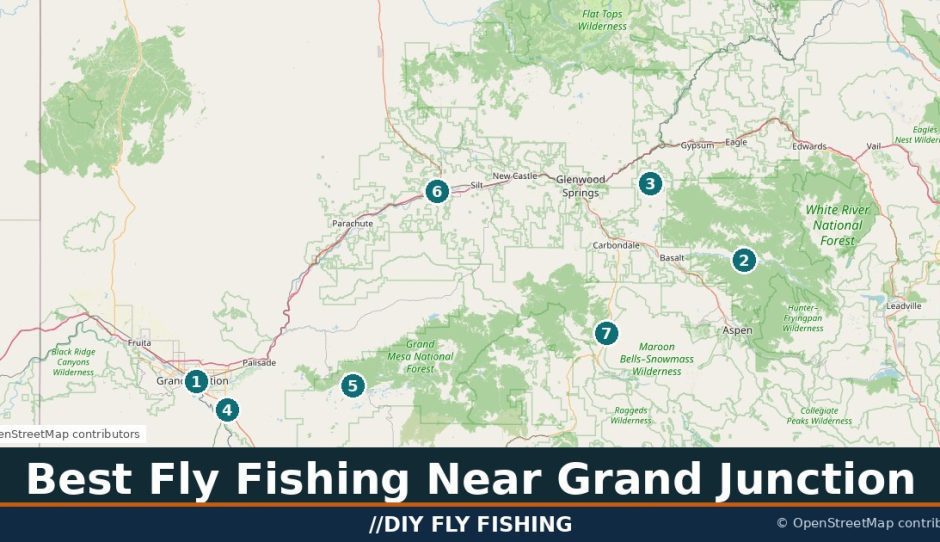
Take this guide on the water — get turn-by-turn directions to every spot below with the DIY Fly Fishing app:


Best Fly Fishing Waters Near Grand Junction
Colorado River through town (in town) — The big river runs right past Grand Junction, and the warmer lower reaches are classic smallmouth bass water, with carp to stalk on the flats. Fish big streamers and poppers in the slow runs, especially in summer.
Fryingpan River below Ruedi Reservoir (about 1.5 hours) — The 14 miles between Ruedi and the Roaring Fork at Basalt are Gold Medal water, famous for trophy rainbows grown fat on Mysis shrimp and prolific hatches. It is heavily fished and technical, but the fish of a lifetime swim here.
Roaring Fork River (about 1.25 hours) — A Gold Medal freestone with excellent trout fishing against the backdrop of Mount Sopris, plus the best mountain whitefish angling in the state. It offers more elbow room than the Pan and floats beautifully.
Gunnison River near the confluence (about 15 minutes) — The Gunnison joins the Colorado just west of town, and this lower section fishes for bass and carp in the warmer months. A quick evening option when you don’t have time for the drive up I-70.
Grand Mesa lakes (about 1–1.5 hours) — Roughly 300 alpine lakes dot the world’s largest flat-top mountain, with brook trout, rainbows, and cutthroat willing to take dries all summer. Island Lake and the lakes along the Grand Mesa Scenic Byway are easy starters.
Colorado River upstream near Rifle (about 1 hour) — Head east on I-70 and the Colorado runs colder and more trout-oriented, with roadside access along Interstate 70 and Highway 6. A good wade option for browns and rainbows on a day trip.
Crystal River (about 1.5 hours) — A scenic Roaring Fork tributary near Carbondale with clear canyon water and wild trout. Worth combining with a Roaring Fork day for two-for-one variety.
When to Fish: Grand Valley Seasonality
- Winter (December–February): The Fryingpan and Roaring Fork tailwaters fish through winter on midges and Mysis patterns, while in-town smallmouth water goes quiet. Dress for cold canyon shade on the Pan.
- Spring (March–May): Blue-winged olives and midges on the tailwaters before runoff; runoff typically hits mid-May through June and blows out the freestones. In town, smallmouth begin to wake up late in the season.
- Summer (July–August): Smallmouth bass fishing peaks in the Colorado and Gunnison around town — topwater and streamers at dawn and dusk. Grand Mesa lakes are at their best, and the Fryingpan fishes morning and evening hatches.
- Fall (September–November): Browns in the upper rivers turn aggressive; streamer fishing is excellent and BWOs hatch on overcast days. The Grand Mesa lakes fish well until the first hard freezes.
What You’ll Catch
Grand Junction is a two-species town: smallmouth bass and carp in the warm water around the confluence, and rainbow, brown, and cutthroat trout in the tailwaters and high lakes. The Fryingpan’s rainbows are the trophy draw, grown large on Mysis shrimp, while the Grand Mesa’s alpine lakes hold wild brook trout and cutthroat eager for dry flies. Handle native cutthroat carefully — wet hands, keep them in the water, and release quickly.
Grand Junction Area Fly Fishing Regulations
The Fryingpan River includes well-known catch-and-release sections below Ruedi Reservoir, and the high lakes have their own bag limits, so confirm the rules for each water you visit. Always check the current CPW fishing regulations before every trip, since sections and special regulations change.
Getting There & Access
Grand Junction sits at the junction of I-70 and Highway 50, which makes it the easiest logistical base of the five cities: the Fryingpan and Roaring Fork are up I-70 toward Glenwood Springs, and the Grand Mesa is south via the Grand Mesa Scenic Byway (Highway 65). River access in town comes through the James M. Robb – Colorado River State Park sections, and most of the tailwater fishing is roadside or short-hike. Summer weekends crowd the famous tailwaters, so fish the Pan on weekdays and save the in-town bass water for busy Saturdays.
Plan It With the DIY Fly Fishing App
The Grand Mesa lakes, the Gunnison near the confluence, the Fryingpan day-trip — the DIY Fly Fishing app maps access with directions, flows, and hatch timing for all of it. 250,000+ rivers and lakes, 100,000+ access points, one download.
Prefer the browser? Explore the web map.
More Colorado Fly Fishing
See our Colorado fly fishing guide for the full statewide rundown. Nearby cities: Telluride, Gunnison, Aspen.
Smallmouth in town, Gold Medal trout an hour up the interstate, and 300 alpine lakes on the mesa — Grand Junction is the western slope’s most versatile basecamp.